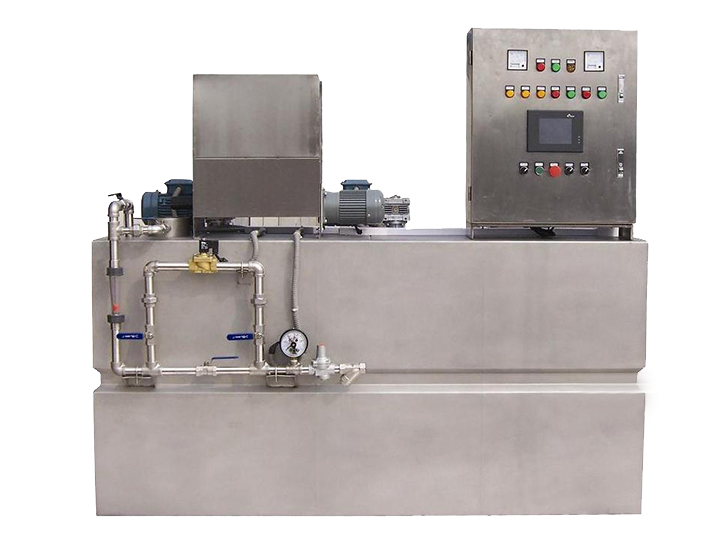
Ammonia Dosing Equipment
 |
 |
Working Principle and Composition
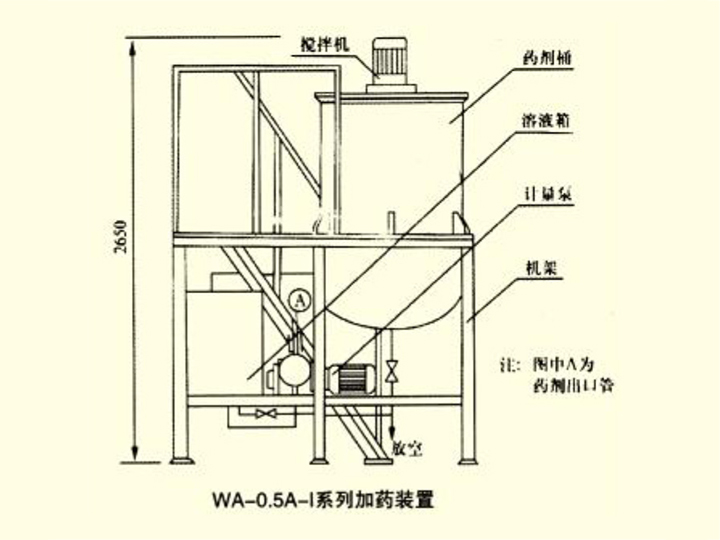
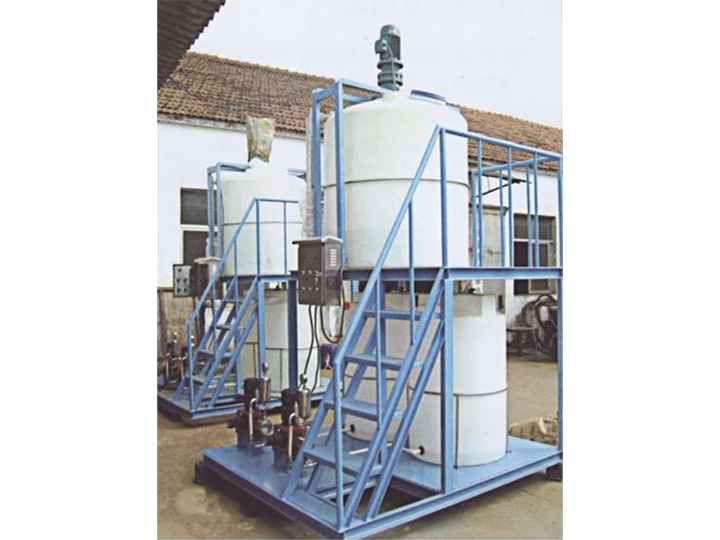
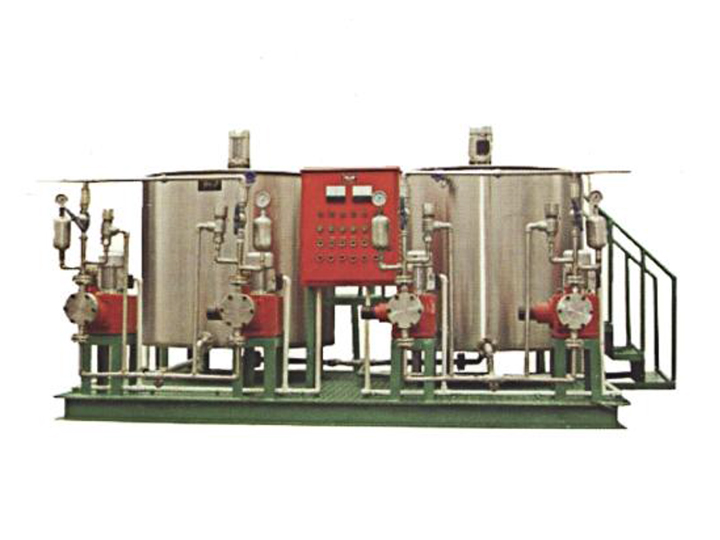
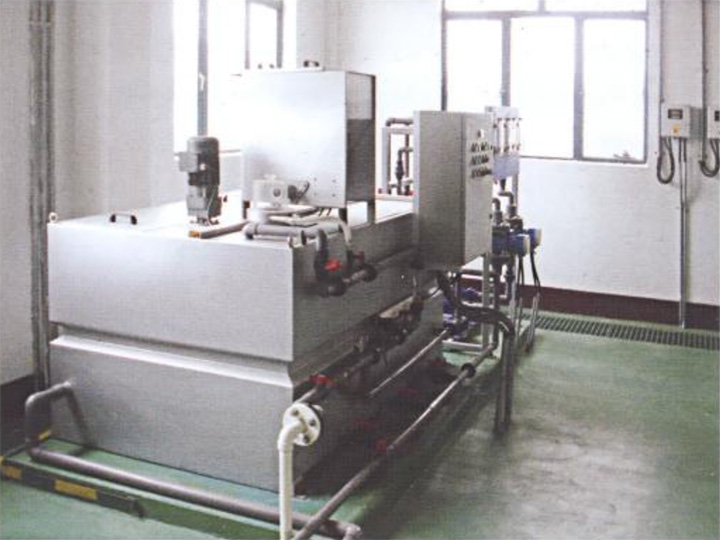
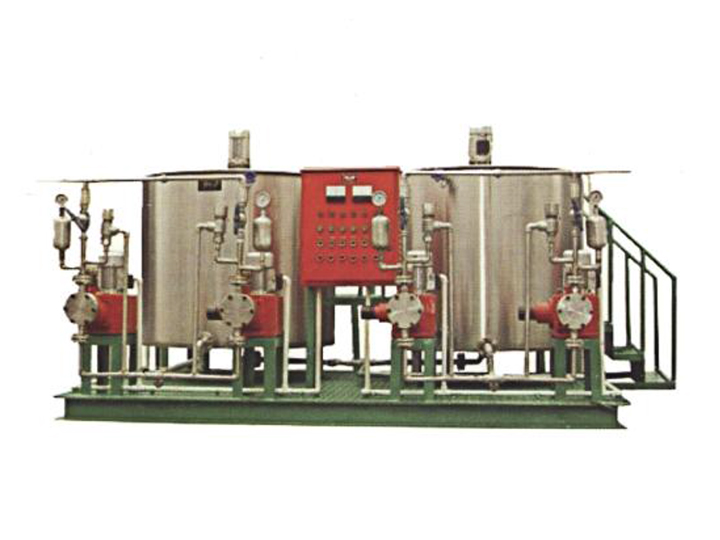
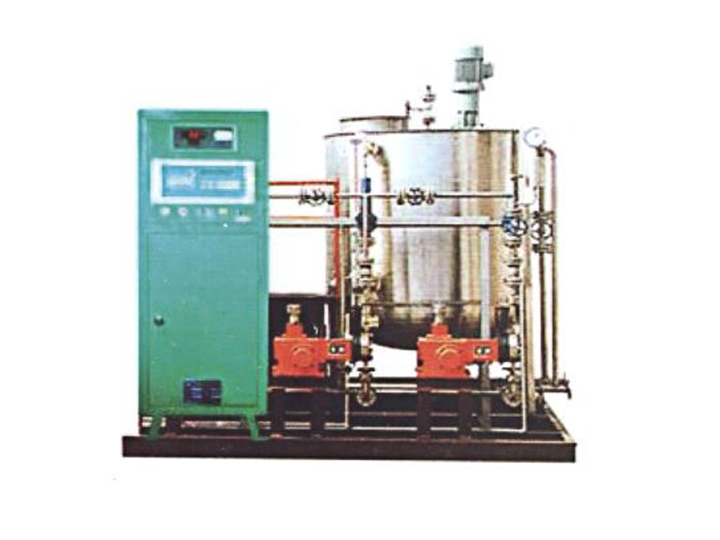
The device consists of a control system and a dosing system. The control system consists of an industrial acidity meter, a regulator, a frequency converter and a control circuit. The dosing system consists of a dosing pump and a medicine box.
The sample water is cooled to a temperature of 20–35°C, the acidimeter detects the pH value, which is displayed numerically and simultaneously converted into a 4–20 mA standard signal output to the MPS programmable controller. The controller compares the input signal with the setpoint, performs logical operations according to a certain algorithm, and outputs a corresponding 4–20 mA current to control the frequency converter, which changes the speed of the dosing pump motor to meet the required dosing amount, keeping the controlled parameters running in an optimal state.
The system is equipped with protection functions: when the liquid level in the medicine tank is low, a low-level contact signal is sent to the MPS and the dosing pump will not start. When the pressure in the dosing pipeline is high, a high-pressure contact signal is sent to the MPS and the dosing pump will stop.
Features
1, The pH meter is an intelligent instrument based on a single-chip microcomputer with an integrated electrode for accurate acidity measurement.
2, The controller uses an MPS programmable controller with flexible and stable performance.
3, Users can choose whether to use a frequency converter based on the type of dosing pump they use.
4, The control method uses fuzzy control, which can eliminate large oscillations.
Application Scope
Ammonia dosing device is used for boiler water supply pH value automatic adjustment, keeping the feed water pH value of the boiler within a certain range for optimal operation. This prevents pH value imbalance from causing acid-base corrosion of boilers and other thermal equipment, keeping the thermal system working in good condition, saving energy by 30–50%, saving ammonia consumption by 20–30%, extending the service life of thermal equipment, and ensuring long-term safe and stable operation of thermal equipment.