WSZ-A Steel Plate Modular Sewage Treatment Equipment
Features
1, Can be buried below the ground surface
2, No impact on surroundings
3, Fully automatic control, no personnel management required
4, Simple operation and convenient maintenance
5, New technology, good effect
6, Long service life
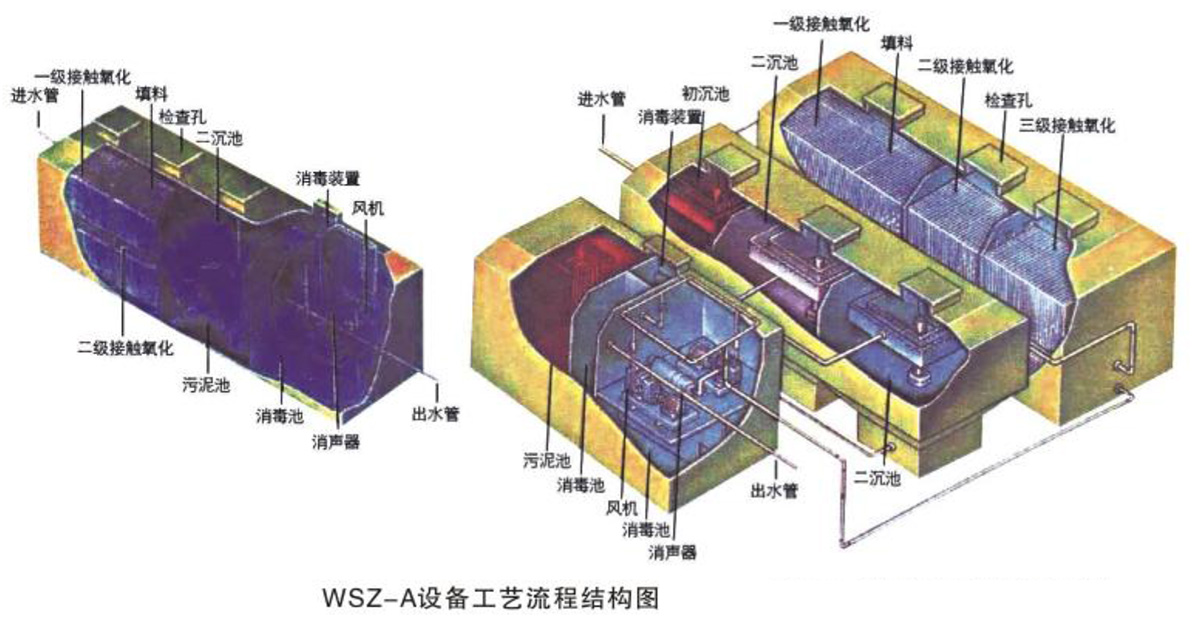
Process Flow Chart
Process Description
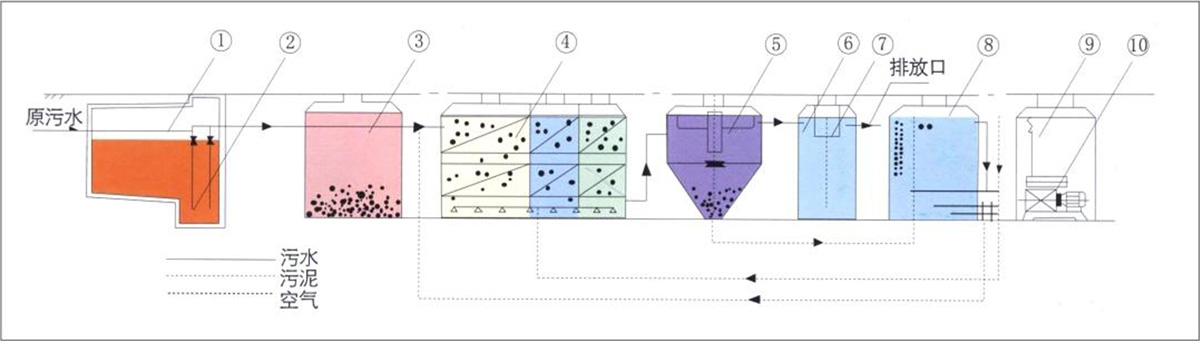
WSZ-A equipment is mainly designed to treat domestic sewage and similar industrial organic sewage. Its main treatment method is the contact oxidation method, which is currently a relatively mature biochemical treatment technology. The water quality parameters are calculated according to general domestic sewage water quality design. Incoming water BOD&sub5; is calculated at 200 mg/L, outlet water BOD&sub5; at 20 mg/L. It consists of six parts:
1, Primary sedimentation tank: The primary sedimentation tank is a solid flow sedimentation tank. The upward flow rate of sewage in the sedimentation tank is 0.3–0.7 mm/second, and the settled sludge is lifted to the sludge tank with air. (Note: WSZ-A 0.5–5 m³/h — sludge flows automatically into the sludge tank)
2, Contact oxidation tank: Water from the anoxic tank flows to the contact tank for biochemical treatment. The contact tank is divided into three feeds, with total residence time of 5 hours or more, and enhanced equipment contact oxidation time can reach 6 hours. The filler is a novel three-dimensional elastic filler, which is easy to form biofilm and is not prone to clogging. The filler specific surface area is 200 m²/m³, and the contact tank water ratio is less than 15:1. (Note: WSZ-A 0.5–5 m³/h — contact tank is level 2)
3, Secondary sedimentation tank: After biochemical treatment, sewage flows to the secondary sedimentation tank. The secondary sedimentation tank consists of two vertical flow settling tanks operating in parallel, with an upflow rate of 0.3–0.4 mm/second. Sludge discharge uses air lifting to the sludge tank. (Note: WSZ-A 0.5–5 m³/h — sludge flows automatically into the sludge tank)
4, Disinfection tank and disinfection device: The disinfection tank residence time is 30 minutes according to the standard "TJ14-74". For hospital sewage, the residence time in the disinfection tank can be increased to 1–1.5 hours. The disinfection method uses solid chlorine tablets for contact dissolution. The disinfection device can continuously adjust the dosing amount according to the flow rate, achieving the goal of more water with more chemical and less water with less chemical. Other disinfection devices can be configured as needed. (Note: For industrial sewage, the disinfection tank and disinfection device may be omitted.)
5, Sludge tank: All sludge from the secondary sedimentation tank is lifted by air to the WSZ-A sludge tank for aerobic digestion. The supernatant from the sludge tank is returned to the regulating tank for reprocessing. There is very little sludge remaining after digestion. Generally, cleaning is done 1–2 times per year. The cleaning method can be done by extending the fecal suction truck from the inspection hole of the sludge tank into the bottom to suction and transport out. (WSZ-A 0.5–5 m³/h — sludge adopts large anaerobic digestion)
6, Blower room and blowers: The WSZ-A blower room is located above the disinfection pool. The entrance of the blower room uses double-layer sound insulation, and the air inlet has a muffler and a blower filter, so there is no noise during operation. Two L Roots blowers are used, which can automatically operate alternately, with a single blower operating life of approximately 30,000 hours.
Equipment Structure and Features
1, Because the WSZ-A equipment is installed underground, maintenance is difficult. Therefore, maintenance-free design was considered in the development. The entire equipment structure is reasonable and reliable. It is also designed so that even if some faults occur, maintenance personnel can enter through each inspection hole of the equipment.
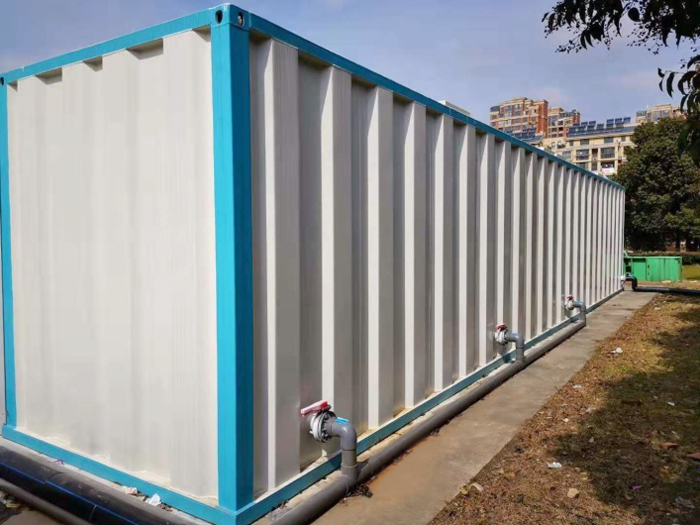
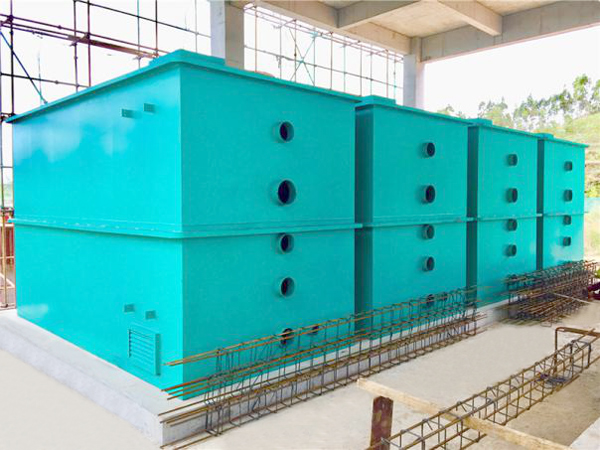
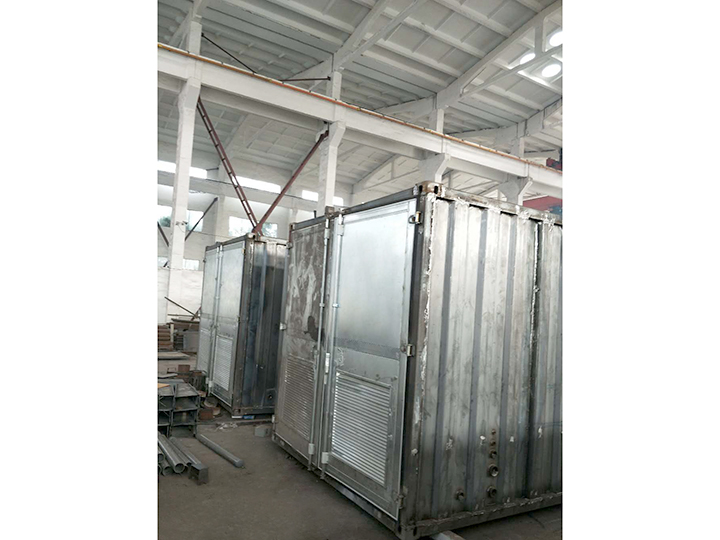
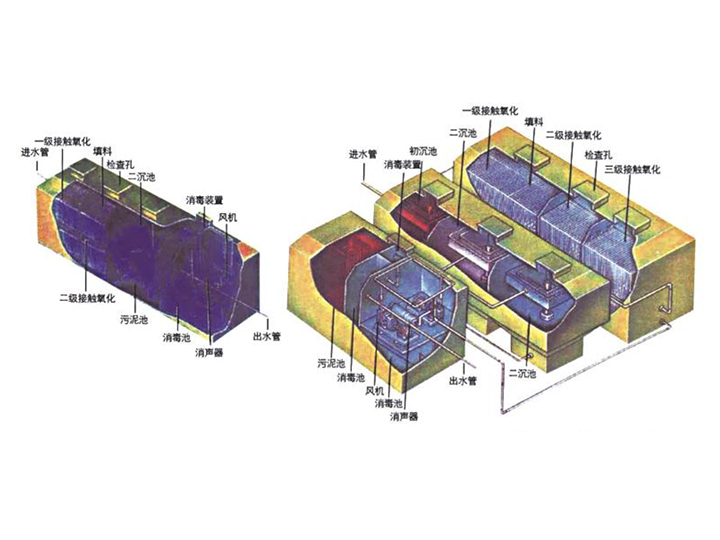
2, All WSZ-A facilities are set up in several boxes, made of A3 steel plate with 8 mm thickness. Each box is connected with seamless steel pipes. The inside and outside of the equipment are coated with chlorosulfonated polyethylene anti-corrosion paint promoted by the Ministry of Chemical Industry. The equipment is generally painted with 8 coats: 2 primer coats and 6 top coats. The anti-corrosion life can generally reach more than 15 years.
3, The entire WSZ-A equipment is designed with a maintenance cycle of 15 years.
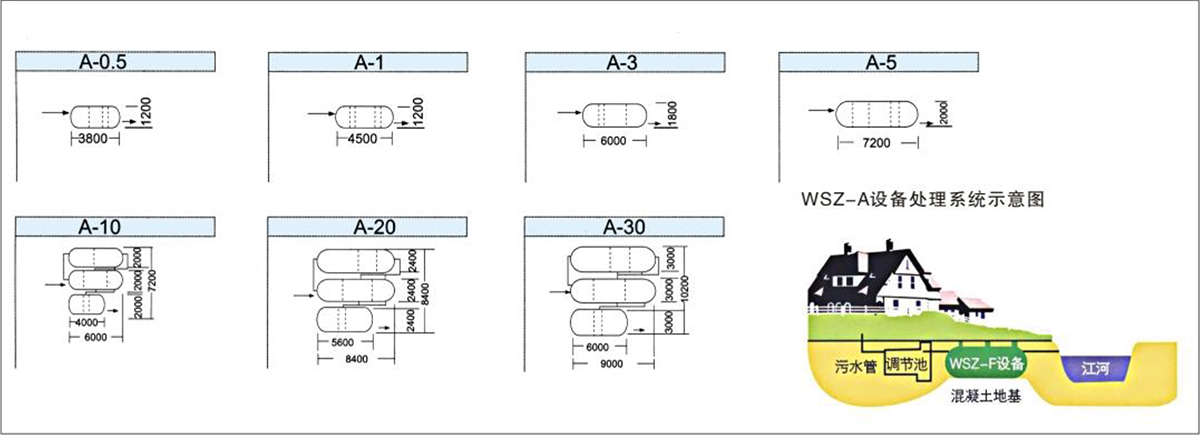
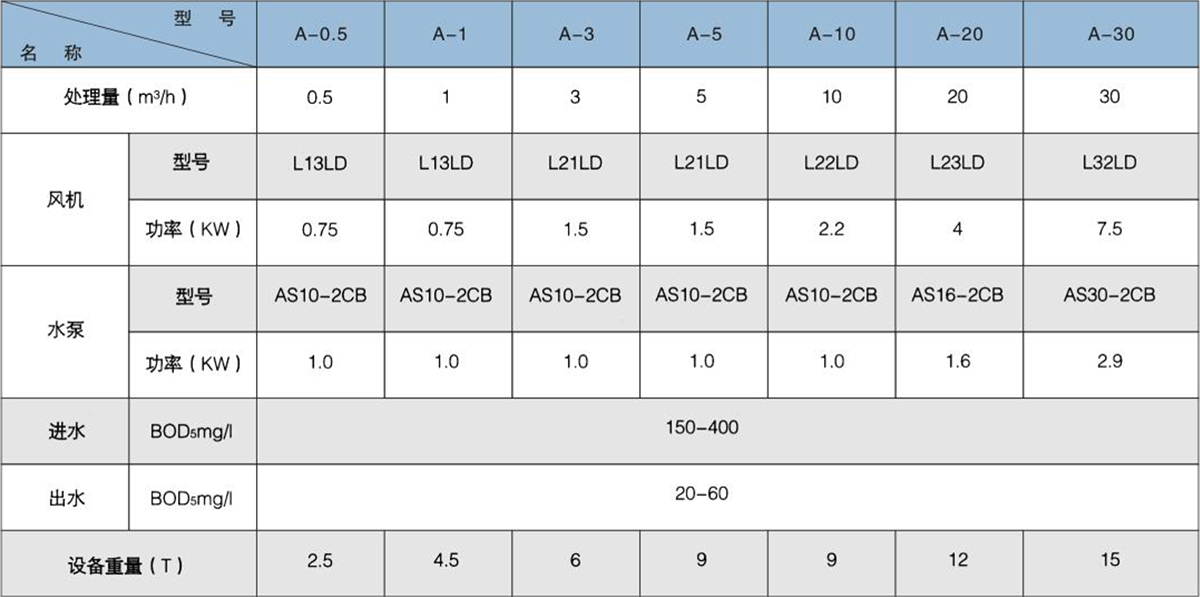
Specifications, Models and Technical Parameters
Equipment Floor Plan