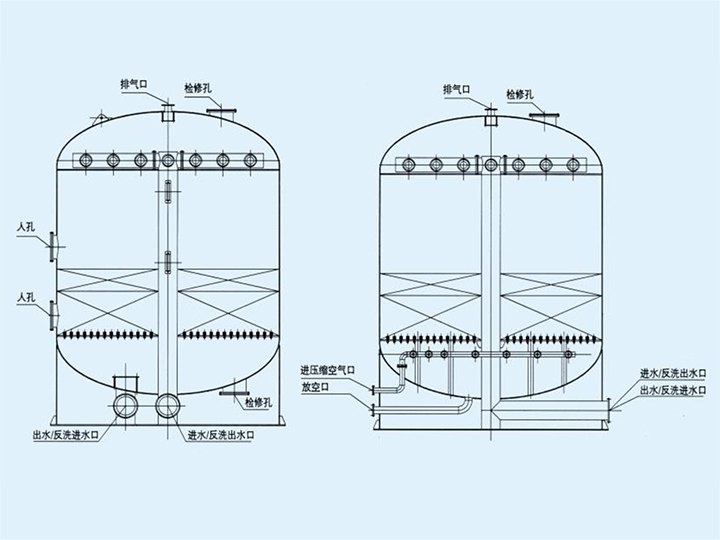
activated carbon filter
Working principle and structure
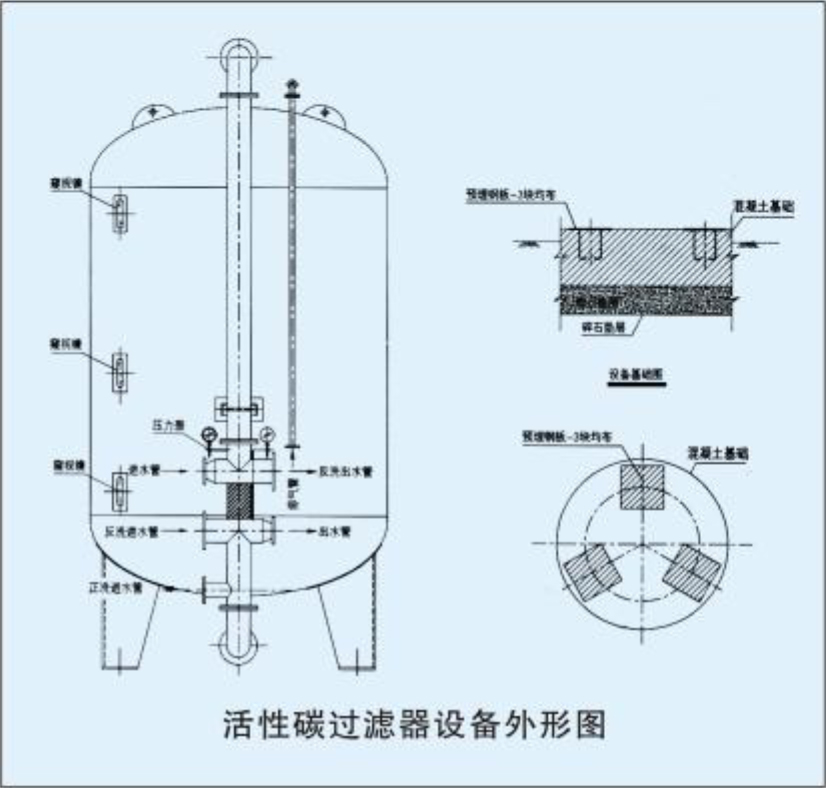
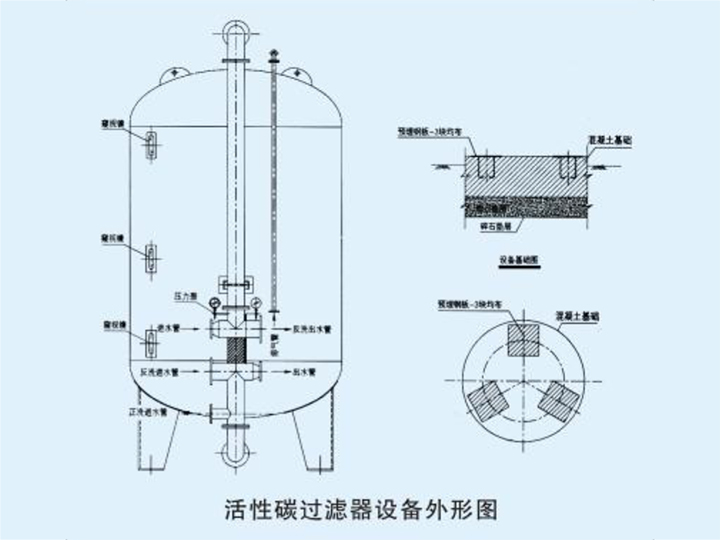
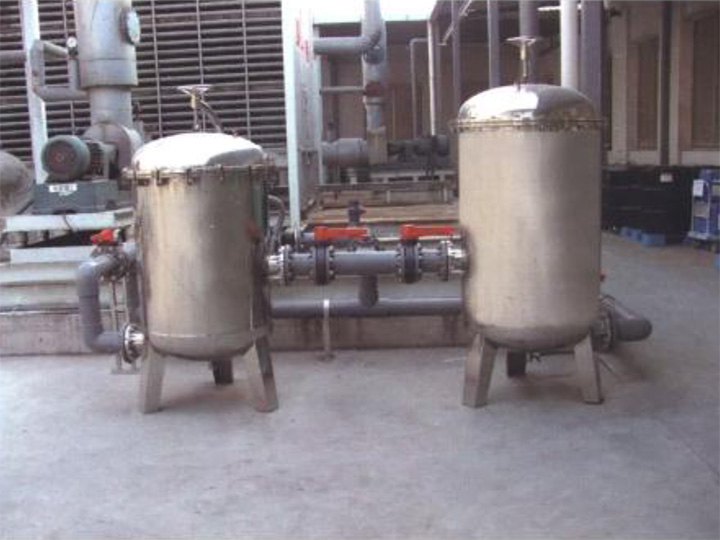
The activated carbon filter is mainly composed of an activated carbon layer and a supporting layer. Activated carbon has developed pores, large specific surface area, and high adsorption capacity. It is precisely because of this characteristic of activated carbon that it is widely used in advanced water treatment, such as domestic water supply, advanced treatment of sewage (water purification), etc.
After activated carbon is used for a period of time, it adsorbs a large amount of adsorbate, gradually becomes saturated, and loses its working ability. In severe cases, it will penetrate the filter layer, so the activated carbon should be regenerated and replaced.
The main function of the supporting layer is to prevent the loss of activated carbon from the equipment, and to play a certain role in evenly distributing water in the water and during flushing.
Scope of application
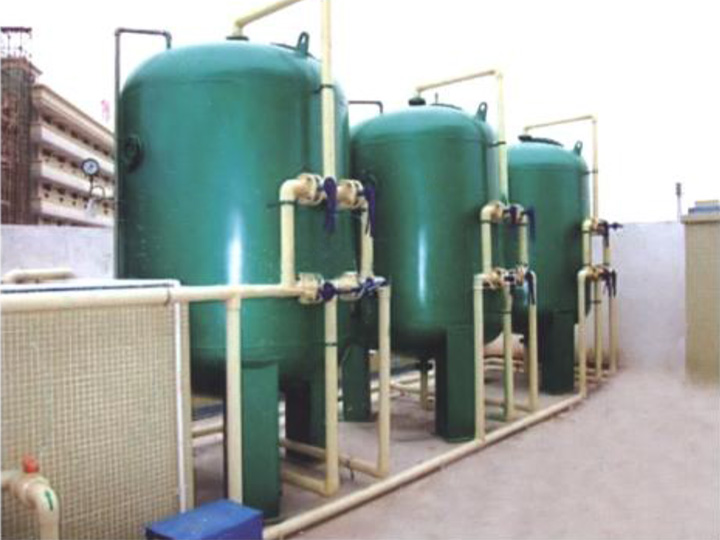
Activated carbon filter uses the adsorption process of activated carbon to remove some dissolved organic matter that cannot be removed by other filters, such as phenol, aldehyde, textile dyes, pesticides, etc. It is generally used as terminal water treatment equipment, or for the removal and final decolorization of pollutants that are difficult to degrade after biochemical treatment. It is widely used in in-depth treatment of water supply and drainage projects.
Model Description
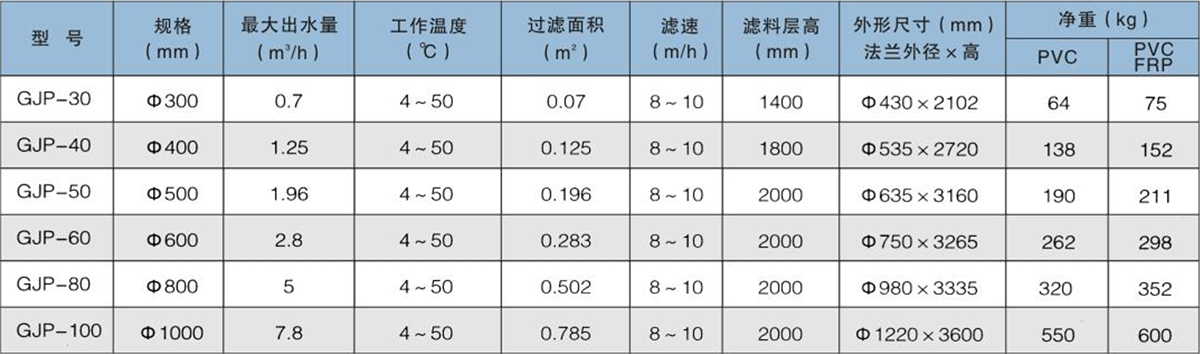
Rigid PVC activated carbon filter specifications, models and technical parameters
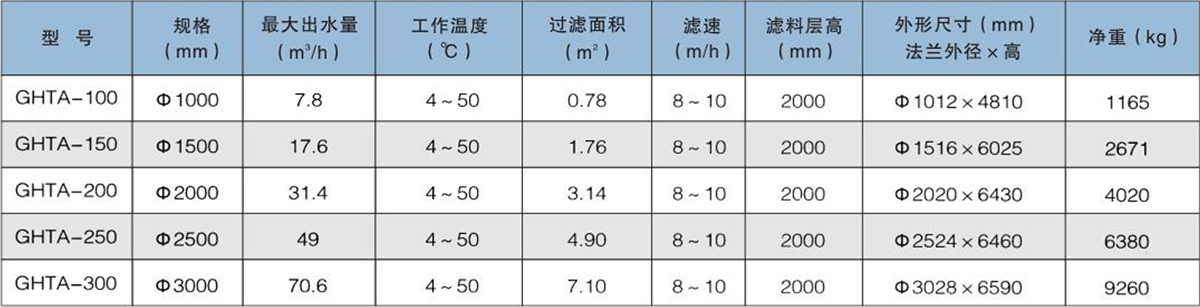
Steel activated carbon filter specifications, models and technical parameters